
Updated February 2026
Join The Conversation
Are you supporting a challenging client or loved one? What is the most difficult thing you deal with as a caregiver? Leave me a comment here, and join the conversation on Facebook where I asked, “The most difficult thing about being a caregiver is_____________.”

EVERYONE benefits from Visual Aids!
Workshop Presentation - Visual Aids and Strategies for Caregivers/Parents

EVERYONE benefits from Visual Aids!
Contact Vizually Speaking today to learn how customized Visual Aids and Strategies can decrease undesired behaviour(s), improve communication, promote independence, and increase self-confidence. Through our dynamic presentation, you will:
✓ Uncover the importance of using customized Visual Aids and Strategies.
✓ Explore the wide range of benefits of customized Visual Aids and Strategies.
✓ Learn practical ways to overcome communication barriers.
✓ Support independence and decrease undesired behaviours.
✓ Access NEW and valuable resources.
WHO ARE CAREGIVERS?

The short answer?
Most of us will be caregivers at some point in our lives.
A caregiver is a family member, friend, or paid professional who regularly supports a child, adult, senior, or person with a disability, illness, or age-related challenges. Caregivers provide a wide range of practical, medical, and emotional support.
Caregivers may be:
✓ Parents
✓ Sons and daughters
✓ Spouses and partners
✓ Grandparents
✓ Extended family members
✓ Friends and neighbours
✓ Paid support workers or personal care attendants
While some individuals receive support from paid professionals, most care in Canada is provided by unpaid family members and friends.
Why Caregiving Matters
At some point, many people will help someone living with:

• A long-term health condition
• A physical disability
• A developmental disability
• Mental health challenges
• Dementia or age-related changes
• Recovery from injury or surgery
Caregiving provides important benefits:
✓ Helps individuals remain at home
✓ Supports independence and dignity
✓ Improves quality of life
✓ Reduces healthcare and institutional costs
✓ Strengthens family and community connections
For many, caregiving feels natural — “I’m just helping.”
But even when it feels rewarding, it can also become physically and emotionally demanding over time.
Supporting the Caregiver Too
Customized visual aids and strategies don’t just help the individual receiving care—they support you – the caregiver.
By providing structure, clarity, and predictability, customized visual aids and strategies:
✓ Reduce daily decision fatigue
✓ Lower emotional stress
✓ Improve cooperation within families
✓ Create shared understanding across caregivers, schools, and healthcare providers
Work with Vizually Speaking
Caregiving can be demanding, and finding time to design effective visual tools is not always easy. You don’t have to do this alone.
Vizually Speaking works collaboratively with caregivers and families to create customized visual aids and strategies that fit real-life routines and unique needs.
We provide step-by-step guidance to help:
→ Identify communication challenges
→ Develop customized visual aids and strategies
→ Implement strategies at home and in daily routines
→ Adapt customized visual aids and strategies as needs evolve over time
Vizually Speaking understands that finding time in today’s highly demanding world to create customized visual aids and strategies can be a great challenge. Vizually Speaking is committed to working collaboratively, providing step-by-step support and assisting in the development and implementation of customized visual aids and strategies.
Contact us today for your FREE consultation.
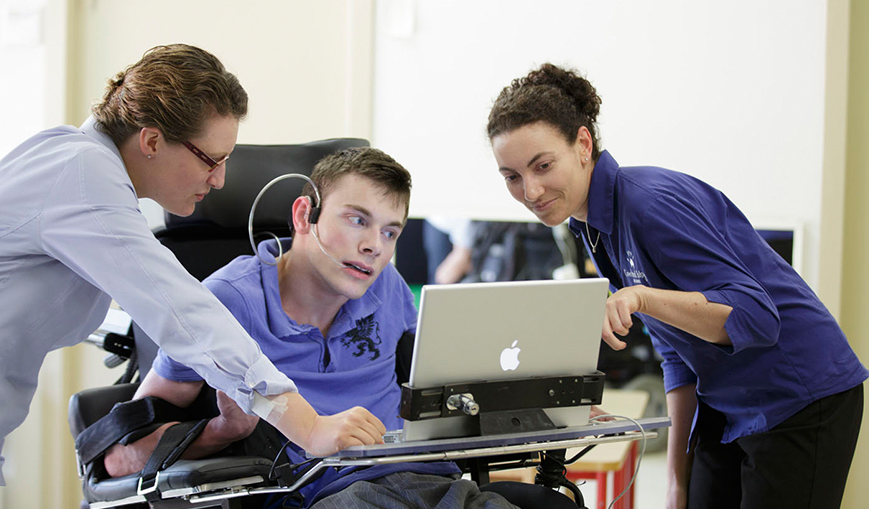
What Do Caregivers Do?
Caregiving can range from occasional assistance to daily intensive support, depending on the needs of the person receiving care. Many caregivers provide help across multiple areas, including personal care, health support, household tasks, and emotional companionship.
Caregivers often provide help across several areas:
| Caregiving Area | Examples of Support | Purpose |
|---|---|---|
| Daily Living Support | Bathing • Dressing • Toileting • Meal assistance • Mobility support | Maintains dignity, independence, and personal care |
| Health & Medical Support | Medication reminders • Monitoring symptoms • Attending medical appointments • Coordinating therapies | Helps ensure health needs are managed safely |
| Household & Practical Support | Cleaning • Meal preparation • Grocery shopping • Transportation • Managing bills or paperwork | Helps individuals continue living safely at home |
| Care Coordination & Advocacy | Scheduling appointments • Managing care plans • Navigating services • Communicating with providers | Supports families navigating healthcare systems |
| Emotional & Social Support | Companionship • Encouragement • Advocacy • Organizing social activities | Reduces isolation and supports emotional well-being |
CONSIDER THESE FACTS:
| Type of Support | Percentage of Caregivers |
|---|---|
| Transportation to appointments or errands | 73% |
| Housework | 51% |
| Home maintenance or outdoor work | 45% |
| Scheduling and coordinating appointments | 31% |
| Managing finances or paperwork | 27% |
| Helping with medical treatments | 23% |
| Personal care (bathing, dressing, toileting) | 22% |
Approximately 1 in 4 caregivers assist with medical treatments or personal care tasks, which can require significant time, skill, and emotional energy.
Why This Matters for Families
Family caregivers play a critical role in supporting people across Canada. Their contributions help many individuals remain safe, comfortable, and connected within their homes and communities.
While caregiving can be meaningful and rewarding, it may also bring challenges, including:
→ Physical exhaustion
→ Emotional stress
→ Financial strain
→ Social isolation
Recognizing caregiving as an essential role is an important step toward ensuring families receive the resources, support, and recognition they deserve.
Key Facts About Caregiving
• Canada has over 8 million caregivers supporting family members or friends.
• Caregivers often provide multiple types of support simultaneously, with most helping with several tasks.
• Emotional support is one of the most common roles, reported by about 69% of caregivers.
• Transportation, meal preparation, and household tasks are also among the most frequent types of assistance.
Vizually Speaking understands that finding time in today’s highly demanding world to create customized visual aids and strategies can be a great challenge. Vizually Speaking is committed to working collaboratively, providing step-by-step support and assisting in the development and implementation of customized visual aids and strategies.
Contact us today for your FREE consultation.
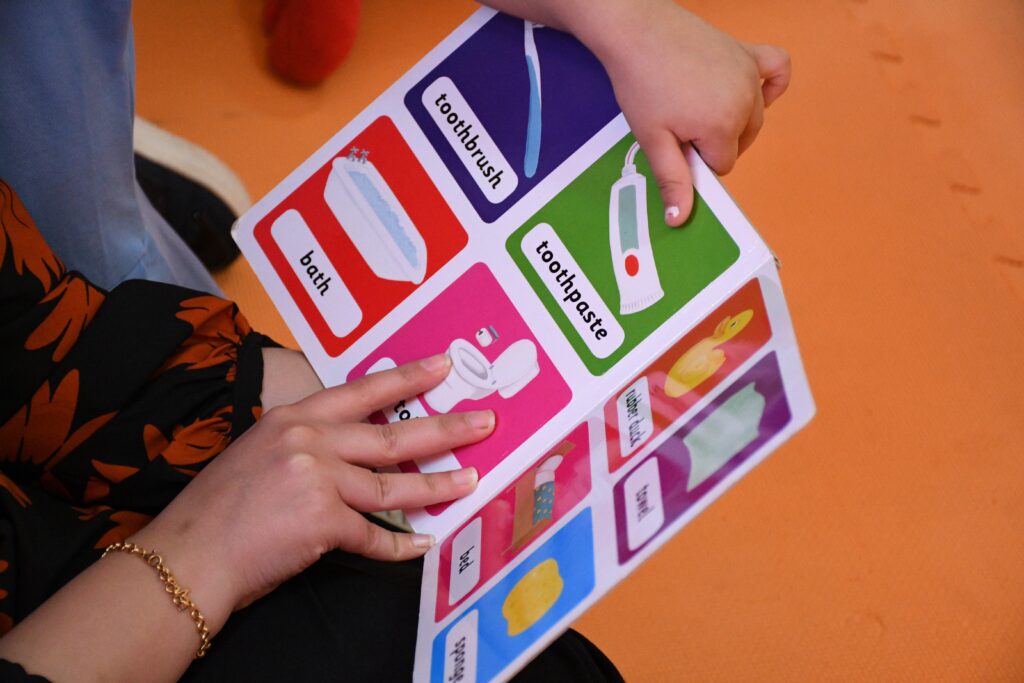
How Customized Visual Aids and Strategies Help Caregivers and Families
Caregiving often involves managing routines, communication, and emotional support for someone who may struggle with memory, language, or transitions. For many families, communication, routines, and transitions become some of the most challenging aspects of daily caregiving.
Vizually Speaking provides clear, structured, and evidence-based customized visual aids and strategies that help caregivers communicate more easily, reduce stress, improve understanding, and support independence for both caregivers and the individuals they care for.
At Vizually Speaking, we specialize in customized visual aids and strategies designed to meet the real-life needs of families, caregivers, children, and seniors with diverse abilities.
Why Customized Visual Aids and Strategies Matter in Caregiving
Many caregivers face daily challenges such as:
✓ Repeating the same instructions multiple times
✓ Managing appointments, medications, and therapies
✓ Supporting emotional regulation during stress or transitions
✓ Communicating when speech, memory, or comprehension is limited
Customized visual aids and strategies provide clear, consistent information that can be understood at an individual’s own pace.
This reduces confusion, frustration, and emotional stress for both caregivers and the person receiving care.
Vizually Speaking understands that finding time in today’s highly demanding world to create customized visual aids and strategies can be a great challenge. Vizually Speaking is committed to working collaboratively, providing step-by-step support and assisting in the development and implementation of customized visual aids and strategies.
Contact us today for your FREE consultation.

How Customized Visual Aids and Strategies Support Caregivers at Home
Customized visual aids and strategies can help families:
✓ Improve communication when words are difficult or overwhelming
✓ Reduce anxiety and emotional escalation
✓ Support memory and comprehension
✓ Create predictable routines
✓ Ease transitions between activities, settings, or caregivers
✓ Encourage independence and confidence
✓ Reduce repeated verbal prompting for caregivers
✓ Reduce caregiver burnout
For many families, customized visual aids and strategies help make daily caregiving more predictable and manageable.
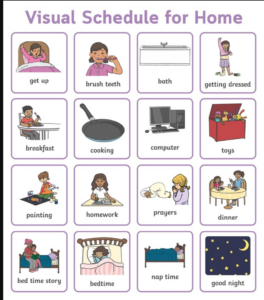
Common Customized Visual Aids and Strategies Families Use
Vizually Speaking designs, creates, and trains how to use customized visual aids and strategies that support daily life, including:
Visual Schedules
Morning, evening, or school routines that show what comes next.
Medication and Therapy Schedules
Clear reminders to support consistent health routines.
Communication Boards
Tools that help individuals express needs, choices, and feelings for home, school, and medical settings.
Social Narratives
Simple explanations that prepare individuals for new, stressful, or confusing situations.
Emotion and Regulation Supports
Customized visual aids that help identify feelings and calming strategies.
Transition Supports
Customized visual aids that prepare individuals for appointments, travel, or changes in routine.
Step-by-Step Task Supports
Supporting self-care, hygiene, and meals.
All visual aids and strategies created by Vizually Speaking are customized, practical, and adaptable as needs change.
Vizually Speaking understands that finding time in today’s highly demanding world to create customized visual aids and strategies can be a great challenge. Vizually Speaking is committed to working collaboratively, providing step-by-step support and assisting in the development and implementation of customized visual aids and strategies.
Contact us today for your FREE consultation.
RELATED POSTS YOU MAY LIKE
RELATED LINKS:
211 or dial 211.
Ontario has a central community information line that can provide you with a wealth of information about resources in your community.
https://211ontario.ca/ or dial 211.
thehealthline.ca
Find community services in your area of Ontario using the name of your community, postal code, or by map.
Community Care Access Centers
Ontario’s 14 Community Care Access Centres (CCACs), located across the province, assist people in getting the home and community care they need in their region.
Ontario Community Support Association
OCSA is the voice of home and community support, representing hundreds of agencies, 25,000 staff, and 100,000 volunteers across Ontario.
Home Care Ontario
Home Care Ontario is a member-based organization representing providers of quality home care services from across Ontario
Ontario Ministry of Labour – Family Caregiver Leave
Family caregiver leave is unpaid, job-protected leave of up to eight weeks per calendar year per specified family member.
Federal Resources:
Service Canada – Being A Caregiver
Service Canada provides some links to support and other resources provided by the Federal Government.l
Canada Revenue Agency (CRA) – Family Caregiver Tax Credit
For 2014 and subsequent years, if you have a dependent with an impairment in physical or mental functions, you may be eligible for the Family Caregiver Tax Credit. Visit the CRA website for more information.
Provincial Resources:
The Caregiver Exchange
If you’re caring for a family member or friend who is facing the challenges of age, disability, illness, or injury, CaregiverExchange.ca can connect you with a wide range of information, services, and supports.
Caregiving Matters
Caregiving Matters is an internet-based registered charity offering education and support to family caregivers.
Canadian Virtual Hospice
The Canadian Virtual Hospice provides support and personalized information about palliative and end-of-life care to patients, family members, health care providers, researchers, and educators.
The Powerhouse Project
The Powerhouse Project offers online resources and articles for Ontario’s young carers – youth and young adults, who are in a caregiving role for a family member needing assistance with their daily life experience.
Caregiver Advocacy:
Ontario Caregiver Coalition
The Ontario Caregiver Coalition is dedicated to recognizing the importance of unpaid caregivers in Ontario by raising awareness of the value they add to the health care system, and by advocating for improved, fair access to needed supports. OCC strives to be the ‘voice’ of caregivers in the province.
Carers Canada
Established in 2000, Carers Canada is a virtual alliance of diverse partner organizations that work collectively and autonomously to identify and respond to the needs of caregivers in Canada.