Updated February 2026
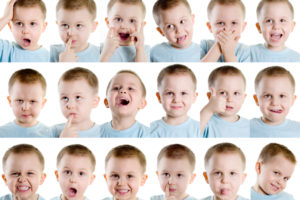
Behaviour is used to describe how an individual uses their actions, words and gestures to response to something important in their personal, social or physical environment.
Join The Conversation
Are you supporting an individual with challenging behaviour? What is the most challenging behaviour you deal with? Leave me a comment here, and join the conversation on Facebook where I asked, “The most challenging behaviour I deal with is_____________.”
EVERYONE benefits from Visual Aids!

Workshop Presentation - Visual Aids and Strategies
EVERYONE benefits from Visual Aids!

Contact Vizually Speaking today to learn how customized Visual Aids and Strategies can decrease undesired behaviour(s), improve communication, promote independence, and increase self-confidence. Through our dynamic presentation, you will:
✓ Uncover the importance of using customized Visual Aids and Strategies.
✓ Explore the wide range of benefits of customized Visual Aids and Strategies.
✓ Learn practical ways to overcome communication barriers.
✓ Support independence and decrease undesired behaviours.
✓ Access NEW and valuable resources.



Research shows a strong correlation between language disorders and behaviour. Individuals with language difficulties may struggle to understand what is being said and/or to express their thoughts and ideas effectively. As a result, they may experience frustration, lowered self-esteem, and feelings of being “stupid” or like a failure.
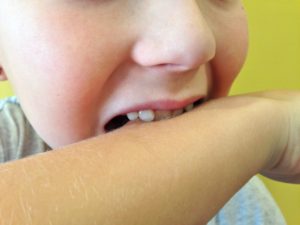
When language difficulties go undetected, these challenges can present as behavioural concerns. An individual may appear noncompliant, withdraw from interactions, become easily distracted, avoid or escape tasks, interfere with others, or display excessive or inappropriate behaviours. In some cases, this may include physical aggression, self-injurious behaviours, sensory processing difficulties, and/or internalizing behaviours.
Individuals with behavioural difficulties should consider a language assessment by a Speech-Language Pathologist. This assessment helps determine how effectively the individual is able to communicate, comprehend, and use language.
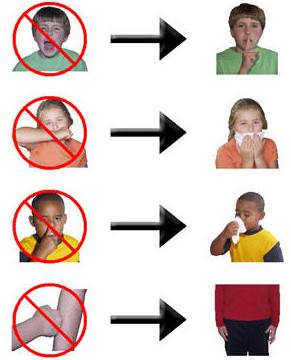
The results can guide the development of visual aids and strategies, as well as appropriate educational and behaviour programs. Recent studies have demonstrated that the effective use of visual aids and strategies can significantly improve communication and reduce— or in some cases eliminate—many undesired behaviours.
Behaviour, no matter how minimal or challenging, serves a purpose, function, and meaning for the individual displaying it. Individuals who exhibit undesired behaviours often experience communication and language difficulties—meaning that “behaviour is language.”
By understanding that an individual is attempting to communicate something through their behaviour, and by combining this insight with effective behavioural management techniques, positive reinforcement, and the use of individualized visual aids and strategies, caregivers and professionals can better support the individual’s communication needs and promote positive behavioural outcomes.

Vizually Speaking understands that finding time in today’s highly demanding world to create customized visual aids and strategies can be a great challenge. Vizually Speaking is committed to working collaboratively, providing step-by-step support and assisting in the development and implementation of customized visual aids and strategies.
Contact us today for your FREE consultation.