Updated February 2026
Join The Conversation
Are you supporting a challenging client or loved one with assistive technology? What is the greatest challenge you face? Leave us a comment here, and join the conversation on Facebook where I asked, “My greatest challenge of supporting an individual with assistive technology is_____________.”
EVERYONE benefits from Visual Aids!

Workshop Presentation - Visual Aids and Strategies

EVERYONE benefits from Visual Aids!
Contact Vizually Speaking today to discover how customized Visual Aids and Strategies can reduce undesired behaviours, strengthen communication, promote independence, and build self‑confidence. Through our dynamic presentation, you will:
✓ Uncover the importance of using customized Visual Aids and Strategies.
✓ Explore the wide range of benefits of customized Visual Aids and Strategies.
✓ Learn practical ways to overcome communication barriers.
✓ Support independence and decrease undesired behaviours.
✓ Access NEW and valuable resources
Supports such as switches, eye-tracking systems, voice-recognition software, and SGDs help reduce isolation by increasing access to language, improving communication, and enhancing overall quality of life. Technology also makes it possible for many individuals with special needs to learn and participate alongside their peers. A well-known example is physicist Dr. Stephen Hawking, who used an SGD to communicate and deliver lectures around the world.

By using assistive technology and software (e.g., computers, iPads, iPods, Android devices, e‑readers, digital images), as well as speech‑generating devices (SGDs) or other forms of augmentative and alternative communication (AAC) such as the Partner 4, GoTalk 9+, Tech Talk, or DynaVox, individuals can strengthen their communication skills across home, school, work, and community settings. These tools can support motivation, enhance academic and social engagement, and build important life skills. However, SGDs are not the ideal solution for every situation or communication need, as no single device works for everyone.
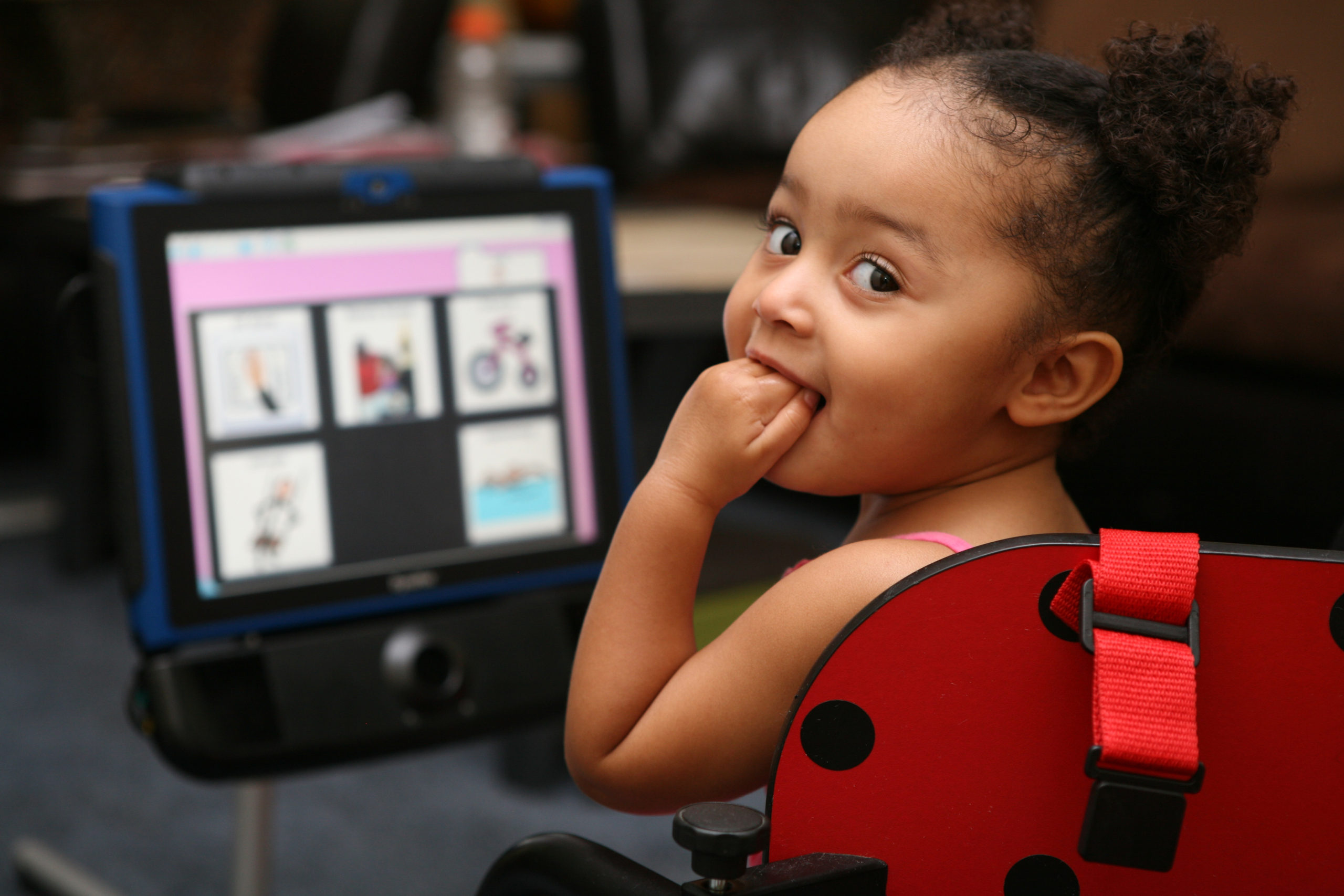
Children on the autism spectrum have extensive interest in computers, television, and video and the majority choose to spend more time with electronic media than with all other forms of the play combined. – Shane & Albert, 2008
Vizually Speaking understands that finding time in today’s highly demanding world to create customized visual aids and strategies can be a great challenge. Vizually Speaking is committed to working collaboratively, providing step-by-step support and assisting in the development and implementation of customized visual aids and strategies.
Contact us today for your FREE consultation.
Key Consideration
The most effective SGD is not the most advanced, but rather the one that best matches the individual’s communication abilities, motor skills, sensory needs, environments, and goals.
Visual Hierarchy of SGDs
(Most concrete → Most abstract)
→ Real objects with voice output
→ Photos with recorded messages
→ Symbols or line drawings
→ Words with voice output
→ Typed text
→ spoken speech

After an individual has demonstrated consistent understanding and use of static, non‑moving visual aids (e.g., printed pictures), it may be appropriate to introduce more complex visual supports, such as dynamic display systems or touch‑screen devices, including iPods or AAC devices.
Some of the benefits of using a static display include but are not limited to:
✓ batteries or plugs are not required
✓ with the proper protection, it is easy to take with you on the go anywhere
✓ less expensive
✓ easy to replace if lost or damaged
In today’s technology‑rich world, it’s easy to feel overwhelmed by the number of available options. The challenge lies in selecting the most appropriate assistive technology or speech‑generating device to support an individual’s specific needs and help prepare them for the future. By considering the individual’s goals, communication abilities, fine motor skills, and cognitive development, it becomes possible to determine which technology or device will be the best fit.
Vizually Speaking understands that finding time in today’s highly demanding world to create customized visual aids and strategies can be a great challenge. Vizually Speaking is committed to working collaboratively, providing step-by-step support and assisting in the development and implementation of customized visual aids and strategies.
Contact us today for your FREE consultation.
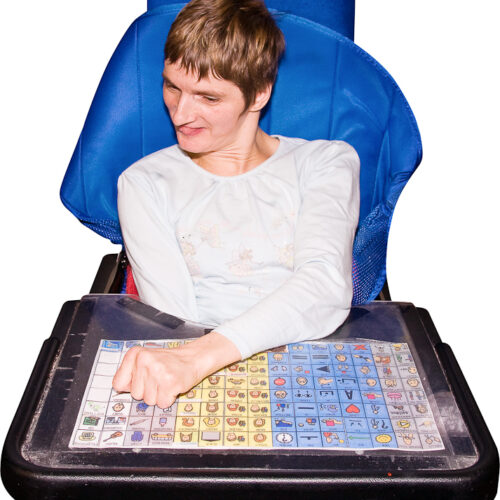
Types of Speech-Generating Devices (SGDs)
Low-Tech SGDs
Best for beginning communicators, concrete thinkers, or individuals who benefit from simplicity.
Single-message devices
Example: Pressing a button to say “help,” “more,” or “I need a break.”
Helpful for: young children, individuals with autism, early ABI recovery, or dementia.
Multi-message button devices
Example: Several buttons for basic needs like “eat,” “drink,” “bathroom,” or “finished.”
Helpful for: home routines, school participation, and daily care.
Static display communication boards/books
Example: A laminated board or book with pictures, symbols, or words that match recorded messages.
Helpful for: individuals who benefit from consistency and predictable layouts.
Mid-Tech SGDs
Support growing vocabulary and participation while maintaining structure.
Sequential-message devices
Example: Pressing a button to play a short sentence or step-by-step message (e.g., morning routine).
Helpful for: routines, storytelling, or therapy sessions.
Grid-based voice-output devices
Example: Each picture location always says the same word or phrase when pressed.
Helpful for: individuals who rely on motor memory and consistency.
Switch-accessible SGDs
Example: A switch activated by hand, head, or foot to make choices or speak messages.
Helpful for: individuals with physical or motor challenges.
High-Tech SGDs
Allow for expanded language, flexibility, and independence when appropriate.
Dynamic display devices
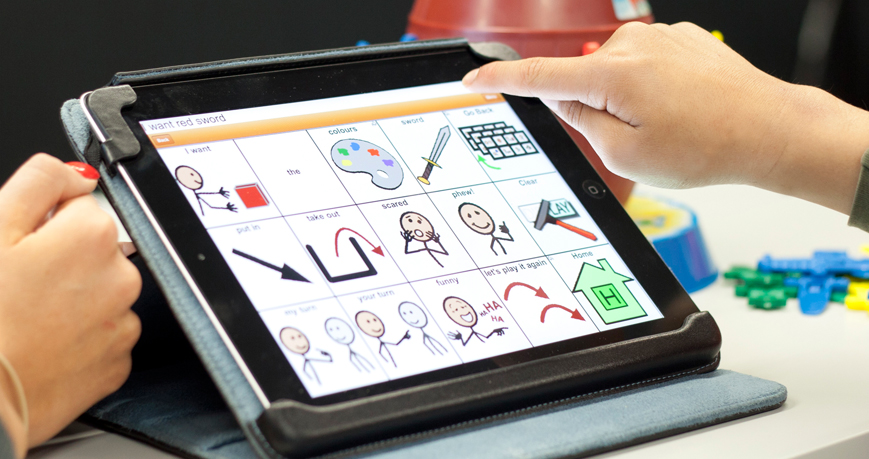
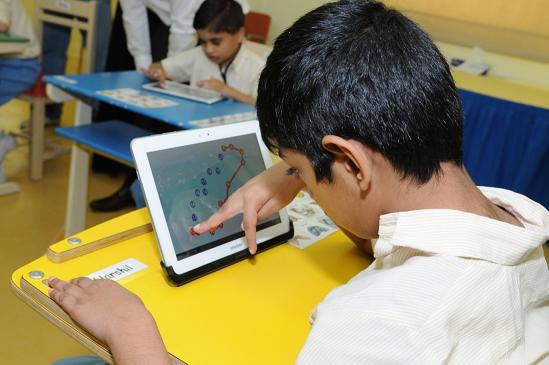
Example: Touchscreen devices where selecting a symbol opens new pages with more choices.
Helpful for: individuals ready for symbolic communication and language growth.
Tablet-based SGDs (AAC apps)
Example: iPad apps using symbols, photos, or text that speak aloud when selected.
Helpful for: school, work, and community communication.
Text-to-speech devices
Example: Typing messages that are spoken aloud.
Helpful for: individuals with strong literacy skills.
Vizually Speaking understands that finding time in today’s highly demanding world to create customized visual aids and strategies can be a great challenge. Vizually Speaking is committed to working collaboratively, providing step-by-step support and assisting in the development and implementation of customized visual aids and strategies.
Contact us today for your FREE consultation.
Low- to Mid-Tech SGDs
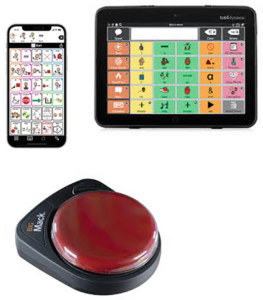
1. BIGmack / Littlemack (AbleNet)
Single-message voice output
Common for early communication, choice-making, and routines
2. Step-by-Step Communicator (AbleNet)
Sequential messages
Useful for routines, storytelling, and task completion
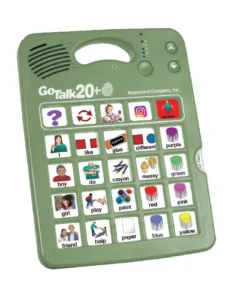
3. GoTalk Series (Attainment Company)
Static display with multiple message levels
Widely used in schools and homes
4. QuickTalker (AbleNet)
Grid-based static display
Consistent layout supports motor memory
High-Tech Dedicated SGDs
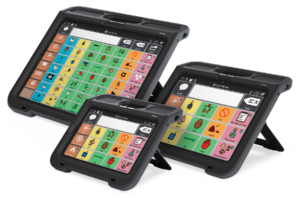
5. Tobii Dynavox I-Series
Dynamic display with eye-gaze and touch access
Often used for complex communication needs
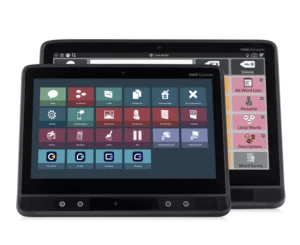
6. Tobii Dynavox Indi
Portable touchscreen SGD
Supports symbols, text, and multiple access methods
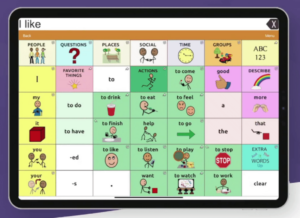
7. PRC Accent Devices (Unity system)
Robust language system with motor planning focus
Common in autism and long-term AAC use
Tablet-Based SGDs (AAC Apps)
8. Proloquo2Go (iOS)
Symbol-based AAC app
Highly customizable, widely used globally
9. TouchChat with WordPower
Symbol and text-based AAC
Strong vocabulary, organization, and language growth
10. LAMP Words for Life
Motor-planning-based AAC system
Frequently used with autism and emerging communicators
Top 10 Commonly Used Speech-Generating Devices (SGDs)
Vizually Speaking understands that finding time in today’s highly demanding world to create customized visual aids and strategies can be a great challenge. Vizually Speaking is committed to working collaboratively, providing step-by-step support and assisting in the development and implementation of customized visual aids and strategies.
Contact us today for your FREE consultation.