Updated February 2026
Dementia is defined as:
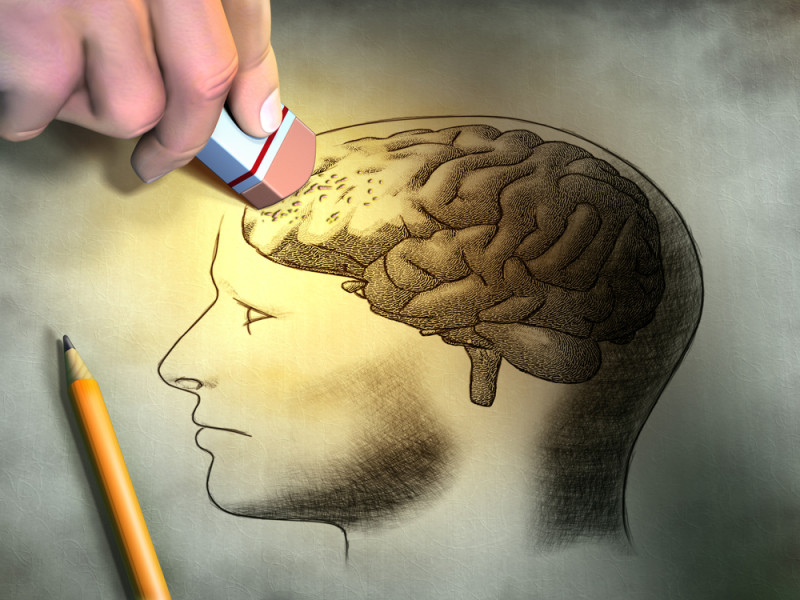
… a gradual decline of mental ability that affects your intellectual and social skills to the point where daily life becomes difficult.- chealth.canoe.ca
Join The Conversation
Are you supporting a challenging client or loved one with dementia? What is the greatest challenge you face? Leave us a comment here, and join the conversation on Facebook where I asked, “My greatest challenge supporting an individual with dementia is_____________.”

Workshop Presentation - Visual Aids and Strategies for Caregivers
EVERYONE benefits from Visual Aids!

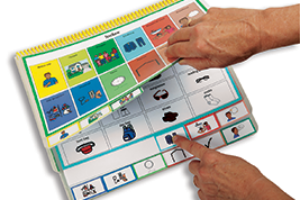
Contact Vizually Speaking today to learn how customized Visual Aids and Strategies can decrease undesired behaviour(s), improve communication, promote independence, and increase self-confidence. Through our dynamic presentation, you will:
✓ Uncover the importance of using customized Visual Aids and Strategies.
✓ Explore the wide range of benefits of customized Visual Aids and Strategies.
✓ Learn practical ways to overcome communication barriers.
✓ Support independence and decrease undesired behaviours.
✓ Access NEW and valuable resources.
Top Early Signs of Dementia
The term dementia is a broad, general term used to describe a range of conditions. There are many different types of dementia, which are differentiated based on the specific physical changes that occur in the brain. Some types of dementia are reversible with appropriate treatment, while others are progressive and not reversible.
✓ Subtle short-term memory loss.
✓ Difficulty communicating thoughts.
✓ Rapid agitation and mood swings.
✓ Disregard for grooming and personal hygiene.
✓ Difficulty identifying humor.
✓ Frequent falling and tripping.
✓ A lapse in judgment.
✓ Misplacing things.
✓ Lack of initiative or apathy.
✓ Getting confused often.

The effects of dementia vary widely and may impact personality, memory (short-term and/or long-term), decision-making, judgment, and orientation, often leading to confusion or a sense of disorientation. Recent data show that about 1 in 9 people (approximately 11%) aged 65 and older in the United States are living with Alzheimer’s or another form of dementia, with prevalence increasing sharply with age — from lower rates in the younger senior groups to over 30% among those aged 85 and older.
In Canada, roughly 7% to 8.7% of adults aged 65 and older are living with some form of dementia, with the number expected to increase as the population ages.
While dementia is more common in older adults, it is not limited to the aging population — people under age 65 can also develop dementia, sometimes referred to as young-onset dementia.
Vizually Speaking understands that finding time in today’s highly demanding world to create customized visual aids and strategies can be a great challenge. Vizually Speaking is committed to working collaboratively, providing step-by-step support and assisting in the development and implementation of customized visual aids and strategies.
Contact us today for your FREE consultation.
Dementia is different from the behaviour of forgetting car keys to repeating stories, which are caused by our stressful daily lives and the bombardment of information overload. It is a serious condition, suddenly presenting itself, impairing an individual’s ability to complete daily tasks, and is not a normal part of aging. It can become present after a stroke, multiple strokes, or in combination with a stroke and Alzheimer’s disease. Family history (genetics), aging, high blood pressure, high cholesterol, diabetes, and smoking are contributing factors to an individual’s risk of developing dementia.
9 Ways To Help Reduce The Risk Of Dementia
1.) Take Vitamin D
2.) Challenge Your Brain
3.) Stay Physically Active
4.) Control Your Alcohol Intake
5.) Protect Yourself Against Head Injuries
6.) Be Social
7.) Take Vitamin B
8.) Stop Smoking
9.) Track Your Numbers – blood pressure, cholesterol levels and weight.

Vizually Speaking understands that finding time in today’s highly demanding world to create customized visual aids and strategies can be a great challenge. Vizually Speaking is committed to working collaboratively, providing step-by-step support and assisting in the development and implementation of customized visual aids and strategies.
Contact us today for your FREE consultation.
Some doctors believe that learning new things helps keep the brain healthy!

Dementia is not a disease, rather it is a collection of many symptoms that suggest the presence of a brain disorder. – Unknown
How Customized Visual Aids Support Daily Living
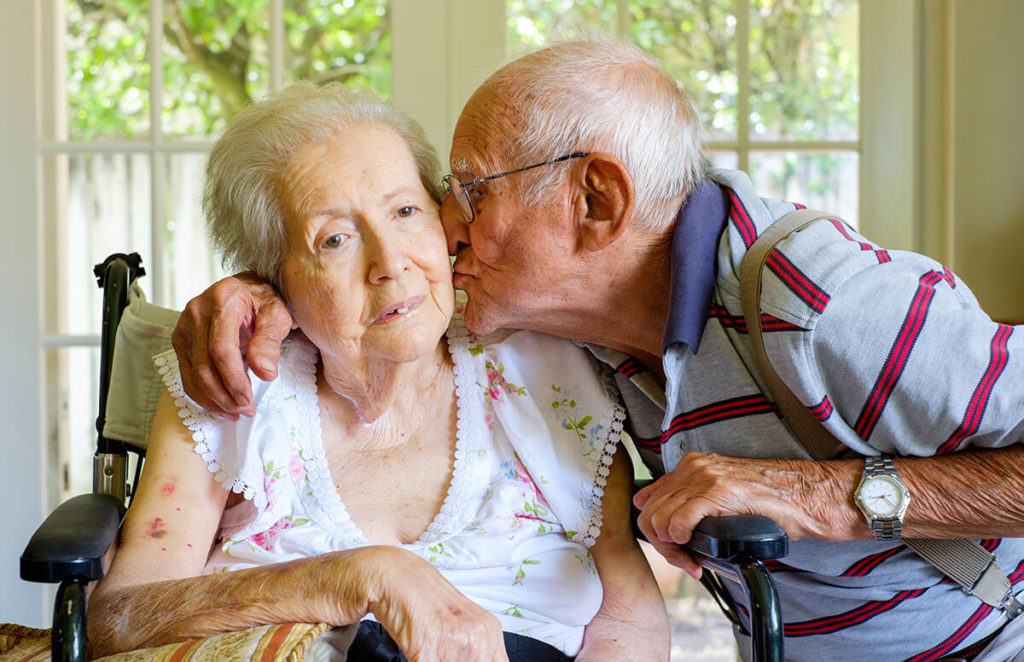
Supporting an individual with dementia involves assisting with declining memory and responding to changes in behaviour that may result from the condition itself, the effects of medication, and the adjustment to a new life situation.
The use of customized visual aids and strategies can help individuals cope with gradual changes in memory, social awareness, and daily functioning.
Customized visual aids may support challenges related to:
→ Repetition and repetitive questioning
→ Disorientation to time, place, or routine
→ Misplaced or lost objects
→ Confusion and difficulty processing information
→ Irritability and emotional regulation
→ Anxiety and stress
→ Depression
→ Restlessness and agitation
When used consistently, customized visual aids can help to:
✓ Promote functional independence
✓ Reduce frustration for individuals and caregivers
✓ Increase predictability and understanding
✓ Support emotional well-being
✓ Enhance overall quality of life
Vizually Speaking understands that finding time in today’s highly demanding world to create customized visual aids and strategies can be a great challenge. Vizually Speaking is committed to working collaboratively, providing step-by-step support and assisting in the development and implementation of customized visual aids and strategies.
Contact us today for your FREE consultation.