Updated February 2026
Join The Conversation
Are you supporting an individual or loved one with Aphasia? What is your greatest challenge? Leave me a comment here, and join the conversation on Facebook where I asked, “The greatest challenge I face with supporting an individual with Aphasia is_____________.”
Workshop Presentation - Visual Aids and Strategies
Everyone benefits from Visual Aids!

Contact Vizually Speaking today to learn how Visual Aids and Strategies for Healthcare Professionals/Frontline Workers can decrease the undesired behaviour(s), improve communication, promote independence and increase self-confidence. Through our dynamic presentation you will:
✓ Uncover the importance of using Visual Aids and Strategies.
✓ Discover the benefits of Visual Aids and Strategies.
✓ Learn how to overcome communication barriers.
✓ Promote independence and decrease undesired behaviours.
✓ Be introduced to NEW resources.
Aphasia
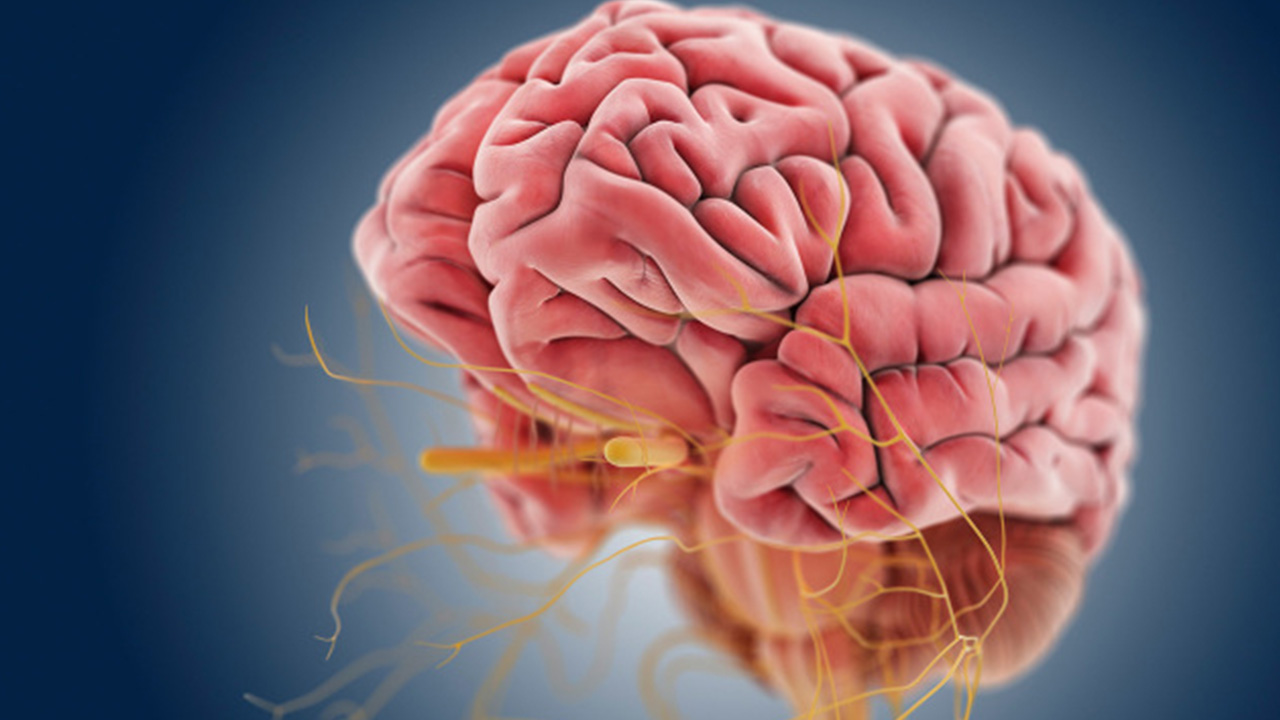
Aphasia is a communication condition that occurs when the language areas of the brain, usually on the left side, are damaged. This damage is most often caused by a stroke or traumatic brain injury (TBI), but aphasia may also develop gradually due to a brain tumor, dementia, or infection.
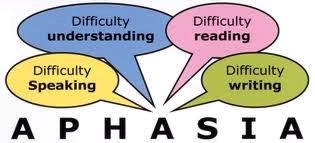
Aphasia affects how a person:
→ Speaks and finds words
→ Understands spoken language
→ Reads and writes
The type and severity of aphasia depend on the location and extent of brain injury. It is important to understand that aphasia does not affect intelligence—individuals know more than they are able to express.
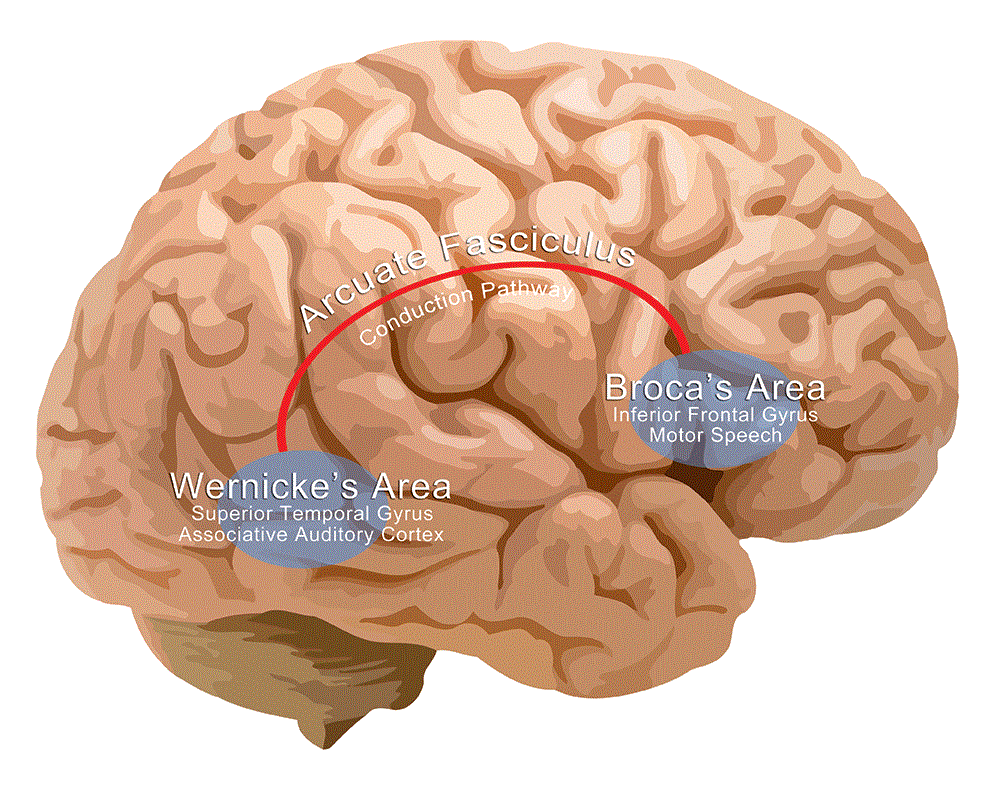
Common Types of Aphasia
| Type of Aphasia | Broca’s Aphasia (Non-Fluent / Expressive) |
Wernicke’s Aphasia (Fluent / Receptive) |
|---|---|---|
| Speech pattern | → Speech is slow and effortful → Short or broken phrases |
→ Speech is smooth and fluent → Sentences may sound normal |
| Sentence structure | → Difficulty forming complete sentences | → Uses full sentences with correct rhythm |
| Word use | → Trouble finding or recalling words | → May use incorrect or made-up words |
| Understanding others | → Understanding is often mostly intact | → Difficulty understanding spoken language |
| Awareness of difficulty | → Usually aware of communication challenges | → May not realize speech is unclear |
| Emotional impact | → Frustration from not being able to express thoughts | → Frustration or distress due to communication breakdowns |
Important for Families to Know
Aphasia affects communication—not intelligence. Individuals often understand far more than they can express, or may speak fluently without fully understanding language.
Customized visual aids, gestures, written key words, and calm, patient communication can greatly reduce frustration and support meaningful connection—regardless of the type of aphasia.
Vizually Speaking understands that finding time in today’s highly demanding world to create customized visual aids and strategies can be a great challenge. Vizually Speaking is committed to working collaboratively, providing step-by-step support and assisting in the development and implementation of customized visual aids and strategies.
Contact us today for your FREE consultation.
Living with Aphasia
Living with aphasia can be complex and deeply personal. Individuals may struggle with changes to their identity and experience isolation, frustration, boredom, or depression as communication becomes more difficult and social connections change.
Supporting a person with aphasia means focusing on what remains, not just what has been lost. Improving an individual’s ability to use their remaining language skills—while learning alternative ways to communicate—can greatly support adjustment and emotional well-being.
Customized visual aids and strategies, used consistently across home, community, work, and social settings, can:
→ Support speech and language comprehension
→ Reduce frustration and challenging behaviours
→ Strengthen memory and understanding
→ Increase access to social relationships, leisure activities, and meaningful work
With the right customized visual aids in place, individuals living with aphasia can continue to participate, connect, and communicate in ways that support dignity, independence, and quality of life.

How Customized Visual Aids Can Help at Home
Customized visual aids give your loved one another way to understand, express themselves, and stay connected when words are hard to find.
✔ Communication books or photo albums to support conversation
✔ Yes/no cards and choice boards to reduce frustration
✔ Visual schedules to support daily routines and predictability
✔ Written keywords, symbols, or icons paired with speech
✔ Step-by-step customized visual aids for daily tasks and activities
Using customized visual aids across home, community, and social settings can help reduce stress, support memory, and increase confidence. Most importantly, customized visual aids help families focus on communication, not perfection, and maintain meaningful relationships.
Vizually Speaking understands that finding time in today’s highly demanding world to create customized visual aids and strategies can be a great challenge. Vizually Speaking is committed to working collaboratively, providing step-by-step support and assisting in the development and implementation of customized visual aids and strategies.
Contact us today for your FREE consultation.
Supporting Someone with Aphasia
Clear routines, patience, and customized visual aids and strategies —such as pictures, written keywords, gestures, and choice boards—can help reduce frustration and support understanding for both the individual and their family.
With the right customized support, people living with aphasia can continue to communicate, connect, and participate meaningfully in everyday life.
How to Support Communication with a Person Who Has Aphasia


→ Include the person in conversations and speak directly to them, not about them.
→ Be patient and allow plenty of time for them to share their message.
→ Listen for meaning, not perfect words—avoid correcting speech.
→ Repeat their message back in a full sentence to confirm understanding.
→ Use short, simple sentences and speak at a natural pace.
→ Repeat or write down key words, or use drawings to support understanding when needed.
→ Keep conversations natural—do not fill in words unless they ask for help.
→ Reduce distractions by turning off background noise or moving to a quieter space. In groups, take turns speaking.
→ Ask for and value their opinions, choices, and preferences.
→ Encourage all forms of communication, including speech, gestures, pointing, drawing, or writing.
→ Use visual supports such as pictures, photos, maps, calendars, paper, and pens to support both understanding and expression.
I have been working with people who have aphasia for over 20 years. I see AAC as a way to bridge the gap between where the person with aphasia is and where that person wants to be. – Dr. Kristy Weissling-Assistant Professor of Practice Barkley Speech-Language and Hearing Clinic
Vizually Speaking understands that finding time in today’s highly demanding world to create customized visual aids and strategies can be a great challenge. Vizually Speaking is committed to working collaboratively, providing step-by-step support and assisting in the development and implementation of customized visual aids and strategies.
Contact us today for your FREE consultation.
Communication Support ✔ Checklist for Families
Supporting a Person Living with Aphasia
☐ Include the person with aphasia in all conversations and speak directly to them.
☐ Be patient and allow extra time for them to express their thoughts.
☐ Focus on the message, not perfect words—avoid correcting speech.
☐ Repeat their message back in a full sentence to confirm understanding.
☐ Use short, simple sentences and speak at a natural pace.
☐ Repeat, write down key words, or draw pictures to support understanding.
☐ Keep conversations natural—do not fill in words unless they ask for help.
☐ Reduce distractions and background noise; move to a quieter space when possible.
☐ In group settings, take turns speaking and keep one conversation at a time.
☐ Ask for and value their opinions, choices, and preferences.
☐ Encourage all forms of communication (speech, gestures, pointing, drawing, writing).
☐ Use visual supports such as pictures, photos, maps, calendars, paper, and pens.

Top 10 Word-Finding Strategies for Aphasia
(Helpful for individuals and communication partners)
1. Delay (Pause)
Give yourself a second or two. With extra time, the word may come. It’s okay to ask others to wait.
2. Describe
Talk about what the item looks like, what it does, or how it’s used. Details help convey meaning.
3. Association
Think of something related. Even if it’s not exact, it may trigger the word or help others understand.
4. Synonyms
Try a word that means the same or something similar.
5. First Letter
Think of or write the first letter of the word. Slowly go through the alphabet to see if something clicks.
6. Gesture
Use your hands or body to act out the word, like charades.
7. Draw
Sketch a quick picture of what you’re trying to say. Simple drawings work well.
8. Look It Up
Think about where the word might be written or shown—on a phone, menu, calendar, sign, or photo.
9. Narrow It Down
Name the general category or topic (food, place, person, activity). Context helps listeners guess.
10. Come Back Later
If the word doesn’t come, take a break and return to it later. That’s okay.
Related Disorders That May Be Confused with Aphasia
There are several communication disorders that can result from muscle weakness, paralysis, poor coordination of the speech muscles, or changes in thinking and cognition. These difficulties may occur alongside aphasia or on their own and can sometimes be mistaken for aphasia. Because each condition affects communication in different ways, it is important to correctly identify the underlying cause so that appropriate treatment and customized visual aids and strategies can be provided, and realistic expectations for recovery can be established.
| Condition | What Is Affected | Key Features | How It Differs From Aphasia |
|---|---|---|---|
| Aphasia | Language (speaking, understanding, reading, writing) | Difficulty expressing or understanding language | Aphasia is a language disorder, not a muscle or movement problem |
| Apraxia (Limb or Facial) | Voluntary movement | Difficulty performing purposeful movements on request (e.g., waving, pretending to brush teeth) | The person knows what they want to do but cannot carry out the movement |
| Apraxia of Speech | Speech planning | Inconsistent speech errors; difficulty planning speech sounds and rhythm | Language knowledge is intact, but speech production is disrupted |
| Dysarthria | Speech muscles | Slurred, slow, weak, or effortful speech; errors are consistent | Language skills are intact; the issue is muscle control, not word choice |
| Dysphagia | Swallowing | Difficulty swallowing food, liquids, or saliva; risk of choking | A swallowing disorder, not a communication or language disorder |
| Dementia | Memory, thinking, personality, insight | Progressive cognitive decline; language difficulties may occur | Language loss is part of a broader cognitive decline and often worsens over time |
Vizually Speaking understands that finding time in today’s highly demanding world to create customized visual aids and strategies can be a great challenge. Vizually Speaking is committed to working collaboratively, providing step-by-step support and assisting in the development and implementation of customized visual aids and strategies.
Contact us today for your FREE consultation.
RELATED LINKS:
aphasia.com
aphasia.org
ninds.nih.gov/disorders/tbi
praacticalaac.org