Updated February 2026
CONTENT WARNING: This video includes scenes of injury and blood that may be disturbing to some viewers. It is intended for educational purposes. Viewer discretion is advised.
Workshop Presentation - Visual Aids and Strategies
EVERYONE benefits from Visual Aids!

Contact Vizually Speaking today to learn how customized Visual Aids and Strategies can decrease undesired behaviour, improve communication, promote independence, and increase self-confidence. Through our dynamic interactive workshop, you will:
✓ Uncover the importance of using customized Visual Aids and Strategies.
✓ Explore the wide range of benefits of customized Visual Aids and Strategies.
✓ Learn practical ways to overcome communication barriers.
✓ Support independence and decrease undesired behaviours.
✓ Access NEW and valuable resources.
Traumatic Brain Injury (TBI)
A traumatic brain injury (TBI) occurs when an external mechanical force causes disruption to normal brain function. (Mayo Clinic), mayoclinic.org. TBIs most commonly result from a sudden blow, jolt, or rotational force to the head or body.
Causes may include falls, motor vehicle collisions, sports injuries, assaults, or workplace accidents. A TBI can occur with or without a visible head injury and may involve a fractured skull, an object penetrating the skull, or internal bleeding within the brain.
Depending on the severity and nature of the injury, a TBI may cause temporary changes in brain function or result in bruising, bleeding, torn tissue, or swelling of the brain. These injuries can lead to long-term physical, cognitive, emotional, and behavioural challenges, and in severe cases, can be life-threatening.
The effects of a traumatic brain injury vary widely from person to person and may change over time, highlighting the importance of early assessment, ongoing support, individualized rehabilitation, and customized visual aids and strategies.
EVERYONE benefits from Visual Aids!
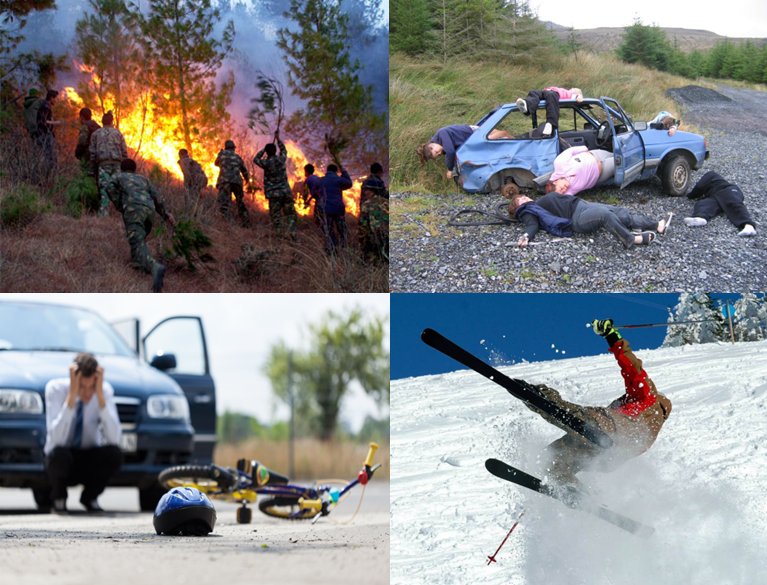
Common events causing traumatic brain injury include:
→ Falls (especially in young children and seniors)
→ Motor vehicle collisions (cars, motorcycles, bicycles, pedestrians)
→ Sports and recreational injuries
→ Physical assaults or interpersonal violence
→ Workplace or construction-related accidents
→ Being struck by or against an object
→ Explosions or blast injuries
→ Shaken or impacted injuries (including abusive head trauma)
EVERYONE benefits from Visual Aids!
Signs & Symptoms of Traumatic Brain Injury (TBI)



Physical
→ Headache or pressure in the head
→ Dizziness or balance problems
→ Nausea or vomiting
→ Fatigue or low energy
→ Sensitivity to light or noise
→ Vision or hearing changes
→ Sleep changes (sleeping more or less than usual)
Thinking & Memory
→ Difficulty concentrating or paying attention
→ Memory problems or confusion
→ Slower thinking or problem-solving
→ Trouble following instructions
Emotional & Behavioural
→ Irritability or mood changes
→ Anxiety, sadness, or emotional outbursts
→ Increased frustration or impulsivity
→ Withdrawal from people or activities
Communication & Sensory
→ Difficulty finding words or understanding language
→ Changes in speech clarity
→ Sensory overload or reduced tolerance to noise, crowds, or touch
Serious Symptoms — Seek Medical Attention Immediately
→ Loss of consciousness
→ Repeated vomiting
→ Severe or worsening headache
→ Slurred speech or weakness
→ Seizures
→ Unequal pupil size or vision loss
→ Increasing confusion or agitation
EVERYONE benefits from Visual Aids!
Traumatic Brain Injury (TBI) in Children
Children’s brains are still developing, so a traumatic brain injury can affect learning, behaviour, emotions, and daily routines in ways that may change over time.
Mild TBI (Concussion): A child may seem tired, irritable, have headaches, difficulty concentrating, or changes in sleep. Schoolwork and play may feel harder for a while.
Moderate TBI: A child may experience noticeable learning challenges, memory difficulties, emotional outbursts, or changes in behaviour that require extra support at school and home.
Severe TBI: A child may need long-term therapy and support for communication, movement, learning, or behaviour.
What families may notice:
✔ Changes in learning, attention, or behaviour
✔ Fatigue, headaches, or emotional outbursts
✔ Difficulty with routines or transitions
How visuals help:
Customized visual schedules, task breakdowns, emotion charts, and predictable routines help children understand expectations, reduce frustration, and feel safe as they recover.
EVERYONE benefits from Visual Aids!
Vizually Speaking understands that finding time in today’s highly demanding world to create customized visual aids and strategies can be a great challenge. Vizually Speaking is committed to collaboratively working together, providing step-by-step support, assisting in the development and implementation of customized visual aids and strategies. For a FREE consultation, contact us today. customized
Traumatic Brain Injury (TBI) in Seniors
In older adults, a TBI often occurs due to falls, accidents, or medical events and may be mistaken for normal aging.
Mild TBI: May include confusion, headaches, balance issues, or memory changes.
Moderate TBI: Can affect problem-solving, emotional regulation, mobility, and independence.
Severe TBI: May require ongoing medical care, rehabilitation, and daily living supports.
What families may notice:
✔ Confusion or memory changes
✔ Balance or mobility challenges
✔ Increased anxiety or withdrawal
How visuals help:
Customized visual schedules, calendars, reminder boards, visual routines, and step-by-step guides support memory, reduce anxiety, and help seniors maintain independence and dignity.
EVERYONE benefits from Visual Aids!
Supporting a Loved One with TBI (Caregivers)
Caring for someone with a traumatic brain injury can be challenging and emotional. Recovery is rarely linear, and needs may change over time.
-
Behavioural changes are often a form of communication, not intentional behaviour.
-
Fatigue, confusion, or emotional outbursts are common and may increase during transitions or busy environments.
-
Consistency, patience, and clear communication are essential

EVERYONE benefits from Visual Aids!
Vizually Speaking understands that finding time in today’s highly demanding world to create customized visual aids and strategies can be a great challenge. Vizually Speaking is committed to collaboratively working together, providing step-by-step support, assisting in the development and implementation of customized visual aids and strategies. For a FREE consultation, contact us today. customized
Recovery After a Traumatic Brain Injury (TBI)
Every person recovers differently after a traumatic brain injury because no two TBIs are the same. Recovery depends on many factors, including the severity of the injury, the area of the brain affected, overall health, and the supports in place.
After a TBI, the body begins a remarkable healing and adaptation process. Unlike skin or bone, the brain does not heal by creating new brain cells. Instead, existing brain cells adapt and reorganize, helping to compensate for injured areas.
In many cases:
→ Brain swelling decreases within the first few weeks
→ Pressure inside the skull stabilizes during this time
→ Recovery is often most noticeable in the early weeks and months
Over the following months, the brain’s chemical balance gradually returns to normal. While damaged nerve connections do not regrow, research shows that the brain can form new pathways and connections over time, supporting continued improvement well beyond the initial recovery phase.
Recovery from TBI is not always linear. Progress may happen slowly and in stages, highlighting the importance of patience, consistency, and individualized supports.
Visual schedules, routines, reminders, and step-by-step supports can play an important role in helping individuals manage daily life, reduce frustration, and support ongoing recovery.
EVERYONE benefits from Visual Aids!
Vizually Speaking understands that finding time in today’s highly demanding world to create customized visual aids and strategies can be a great challenge. Vizually Speaking is committed to collaboratively working together, providing step-by-step support, assisting in the development and implementation of customized visual aids and strategies. For a FREE consultation, contact us today. customized
RELATED LINKS:
biac-aclc.ca
traumaticbraininjury.com
newswire.ca
mayoclinic.com