Updated February 2026
Workshop Presentation - Visual Aids and Strategies
EVERYONE benefits from Visual Aids!

Contact Vizually Speaking today to learn how customized Visual Aids and Strategies can decrease undesired behaviour(s), improve communication, promote independence, and increase self-confidence. Through our dynamic presentation, you will:
✓ Uncover the importance of using customized Visual Aids and Strategies.
✓ Explore the wide range of benefits of customized Visual Aids and Strategies.
✓ Learn practical ways to overcome communication barriers.
✓ Support independence and decrease undesired behaviours.
✓ Access NEW and valuable resources.
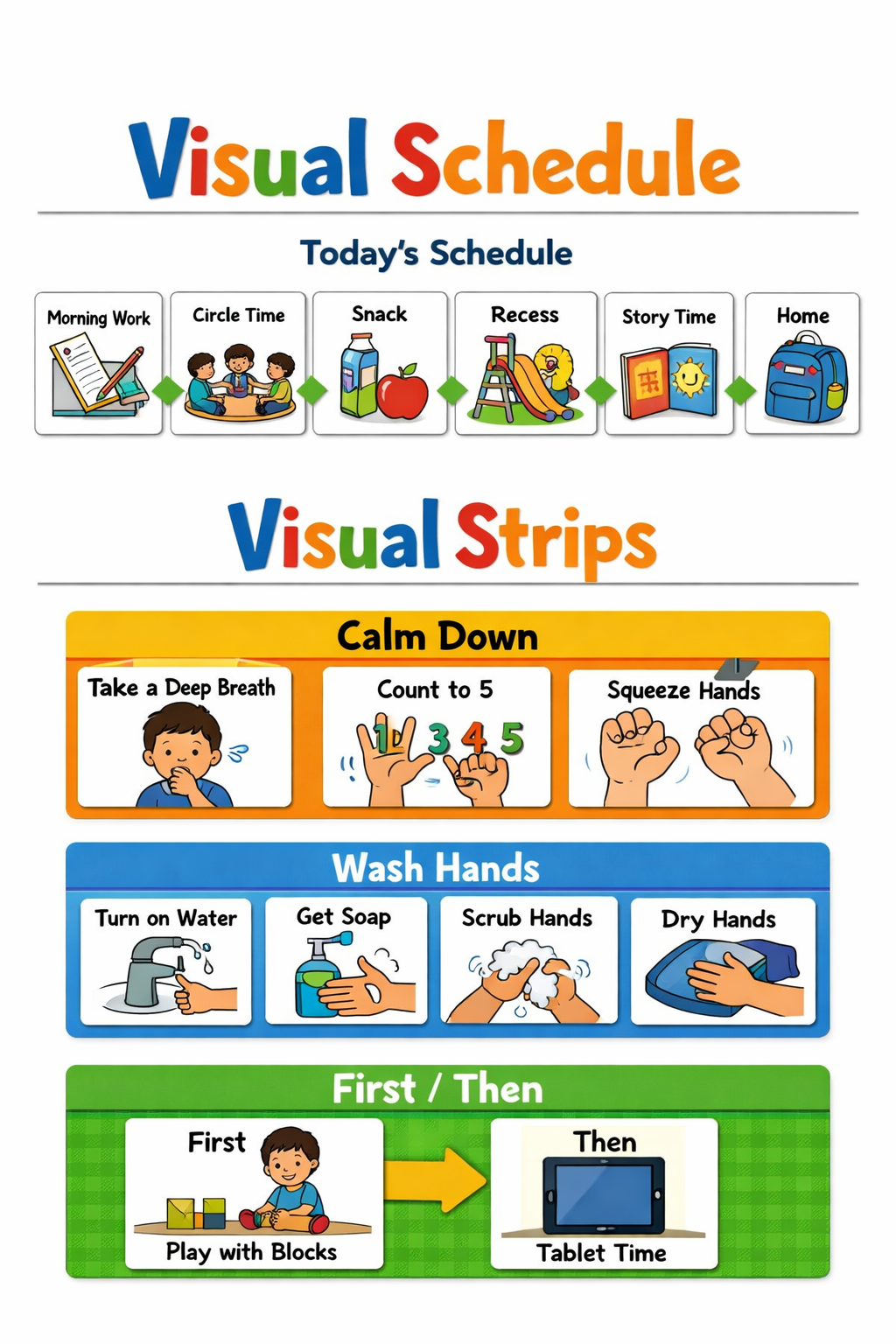
Customized Visual Schedules
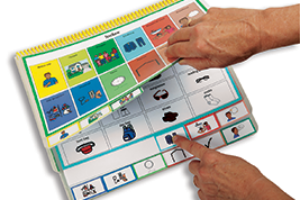
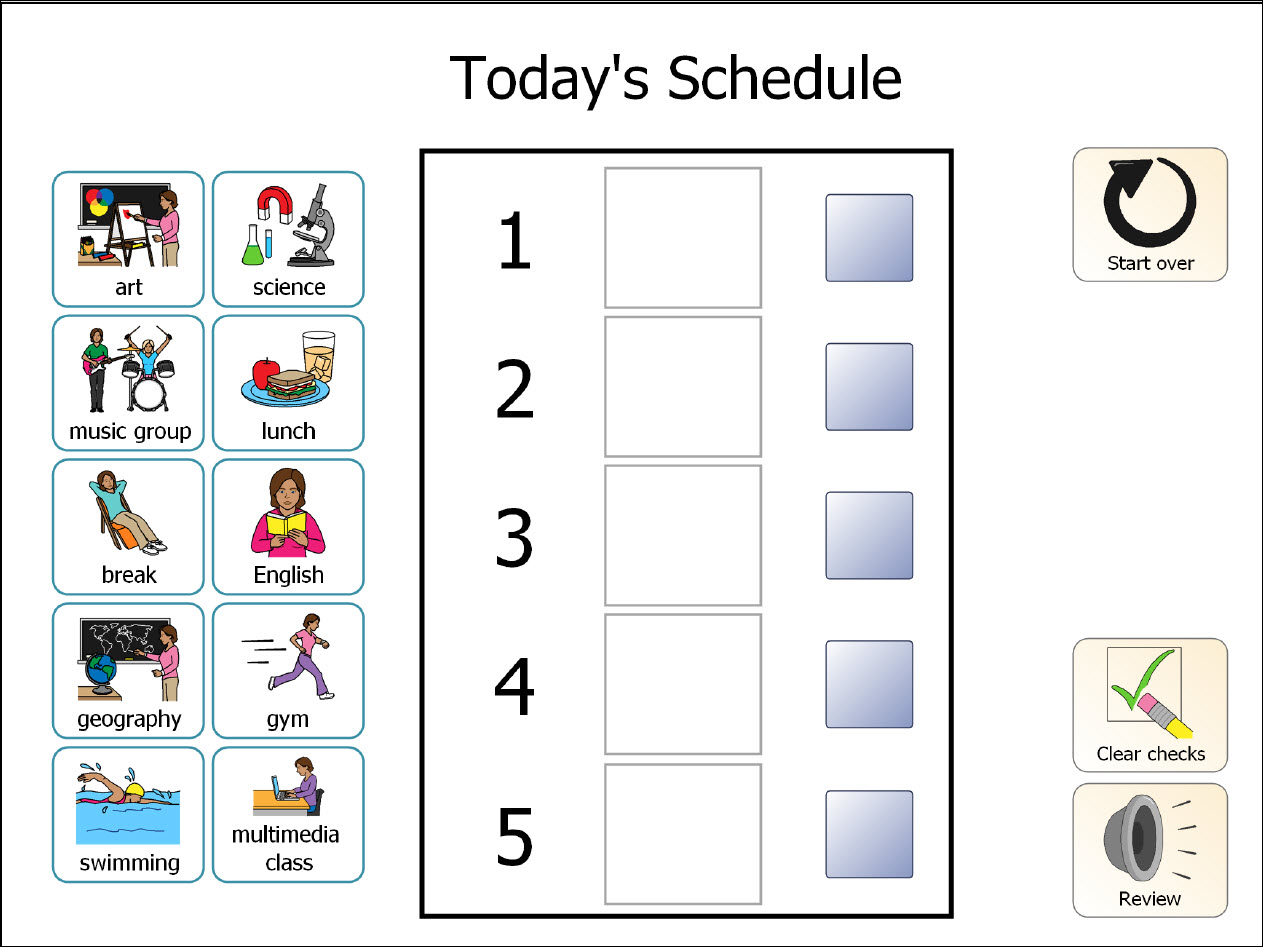
Customized Visual schedules, daily schedules, and routine strips provide a clear structure by showing what will happen and in what order. They can represent a full day, part of a day, or break a task into small, manageable steps.
These supports help individuals understand expectations, build skills, and increase independence—while reducing anxiety, frustration, and reliance on verbal prompts.
Visual schedules can be simple or detailed and may use:
-
Photographs
-
Picture symbols
-
Line drawings
-
Written words
-
Objects or tactile items
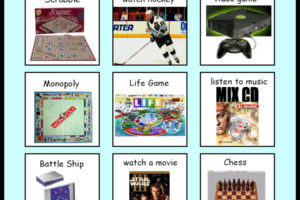
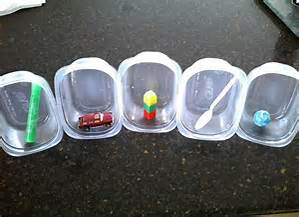
The format is always individualized. An individual is typically ready for a picture or photo-based schedule when they can reliably match images, similar to a simple matching or lotto-style game. Some people recognize photographs more easily, while others respond better to drawings or symbols.
Customized visual schedules are effective across ages, abilities, and environments—supporting success at home, school, work, and in the community.
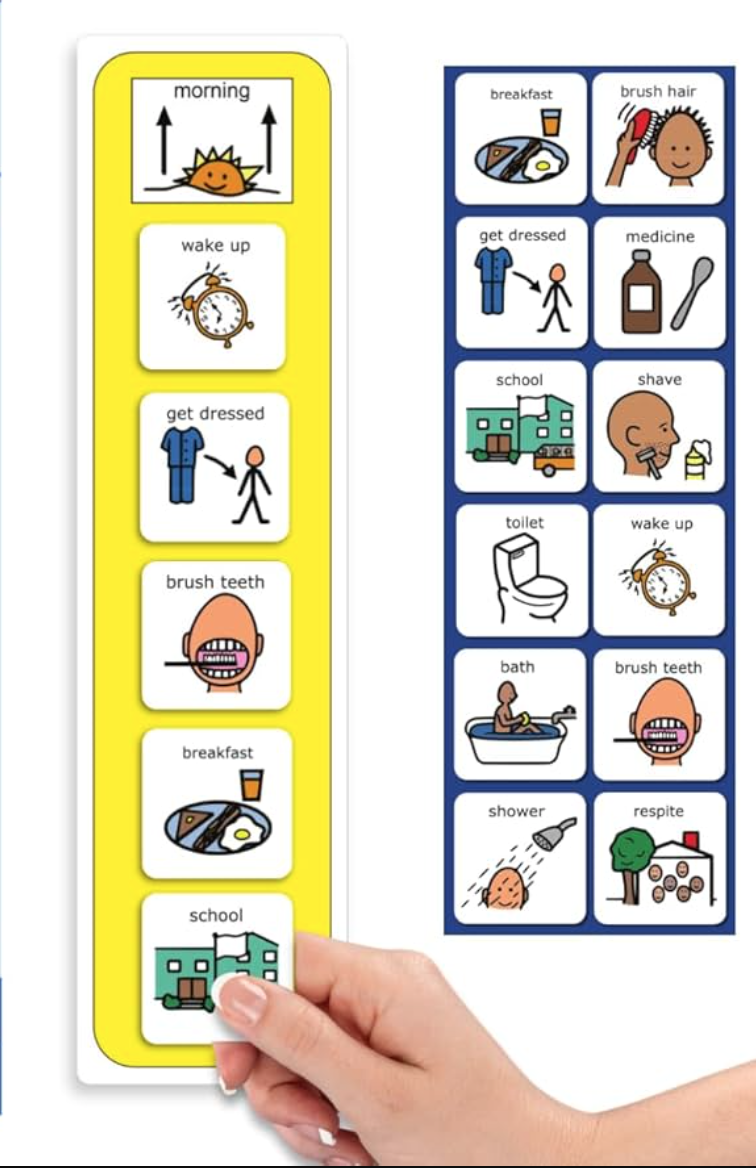
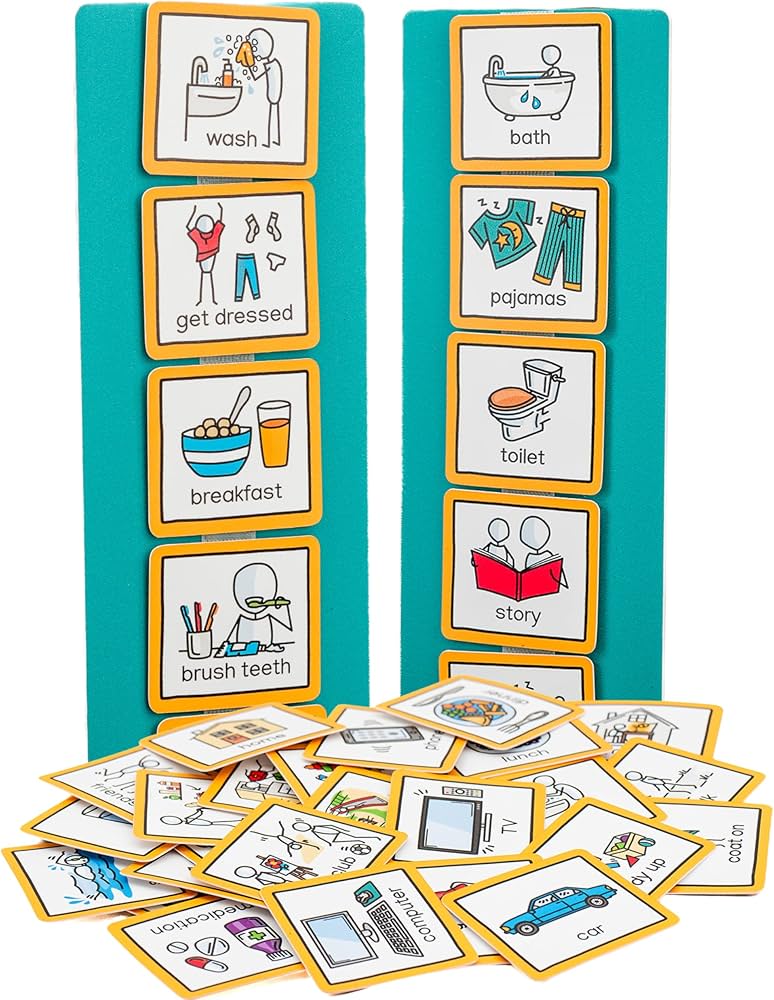
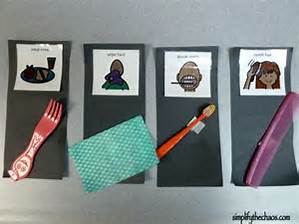
Autism
Customized visual schedules, daily schedules, and routine strips provide predictability by clearly showing what activities will happen and in what order. They may represent a full day, part of a day, or break tasks into small, achievable steps.
For individuals with autism, visual schedules support understanding, communication, and independence while reducing anxiety, transition stress, and reliance on verbal instructions.
Schedules can be simple or detailed and may use photographs, picture symbols, line drawings, written words, or objects. Readiness for picture- or photo-based schedules typically occurs when an individual can consistently match images, similar to a simple matching game. Some individuals respond best to photographs, while others find drawings or symbols easier to understand.
Visual schedules can be used successfully at home, in school, at work, and in the community.
Dementia
Customized visual schedules and routine strips provide gentle structure and reassurance by clearly showing daily activities and familiar routines. They may outline a full day, a portion of the day, or break tasks into clear, step-by-step actions.
For individuals living with dementia, visual supports help reduce confusion, anxiety, and agitation while promoting independence, dignity, and a sense of control. They can support memory, orientation, and participation in daily activities.
Schedules may use photographs, simple drawings, written words, or familiar objects, depending on what is most meaningful to the individual. Visual supports are most effective when they reflect personal routines, past experiences, and current abilities.
Customized visual schedules can be adapted for use in the home, care facilities, and community settings.
Brain Injury
Customized visual schedules, daily schedules, and task strips support organization and follow-through by clearly showing what needs to be done and in what sequence. They may represent a full day, a partial schedule, or break tasks into small, manageable steps.
For individuals with acquired or traumatic brain injuries, visual supports help compensate for challenges with memory, attention, processing speed, and executive functioning. They reduce cognitive load, increase independence, and support successful task completion.
Schedules can include photographs, drawings, written text, symbols, or objects, depending on cognitive and visual needs. Customized visual schedules are introduced based on the individual’s ability to recognize and use visual information consistently.
These supports are effective in rehabilitation settings, at home, at work, and in the community.
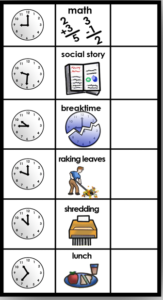
Activity schedules may be suitable for people who find it hard to remember the ‘next steps’ in an activity or daily routine.
They show the sequence of all the steps or stages of an activity – for example; the steps involved in making a coffee, morning routines, chores, grooming, using the washroom, washing your hands or how to do the laundry.
Vizually Speaking understands that finding time in today’s high demanding world to create visual aids and strategies can be a great challenge. Vizually Speaking is committed to collaboratively work together providing a step by step support, assisting in the development and implementation of individualized visual aids and strategies. For a FREE consultation contact us today.